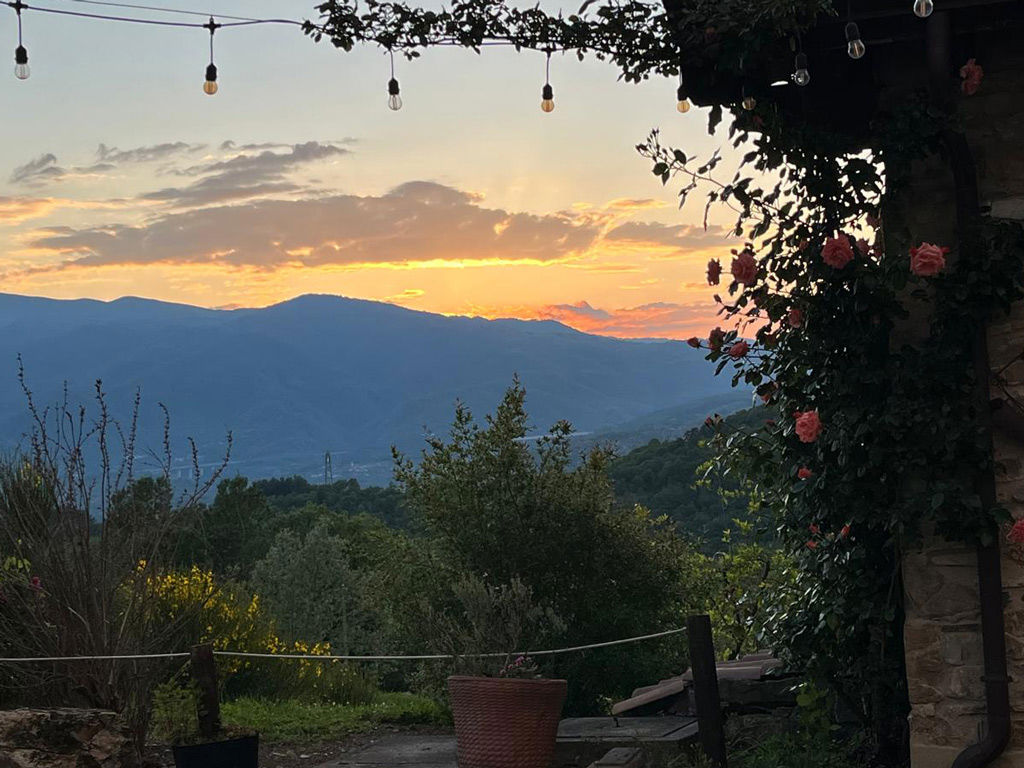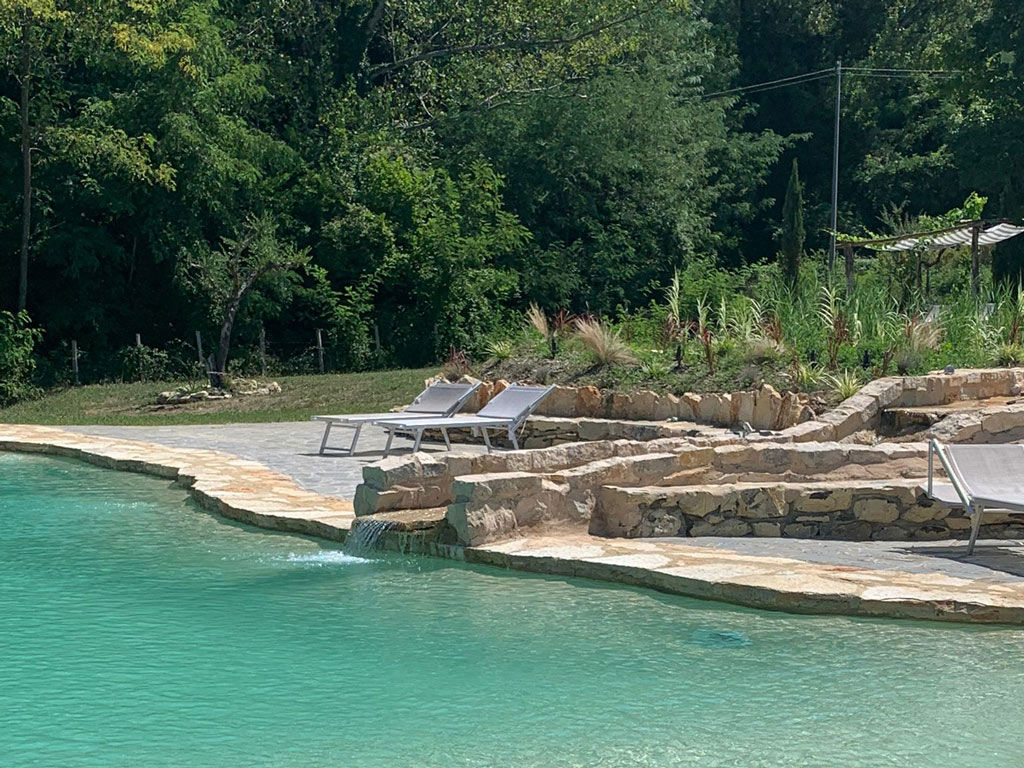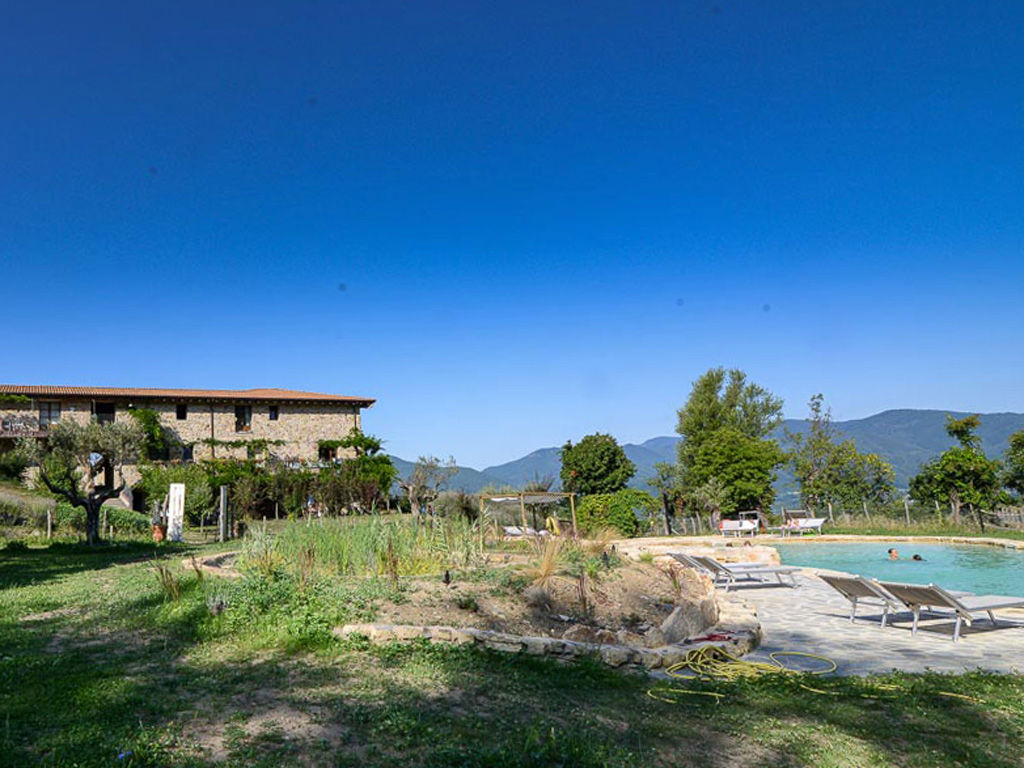
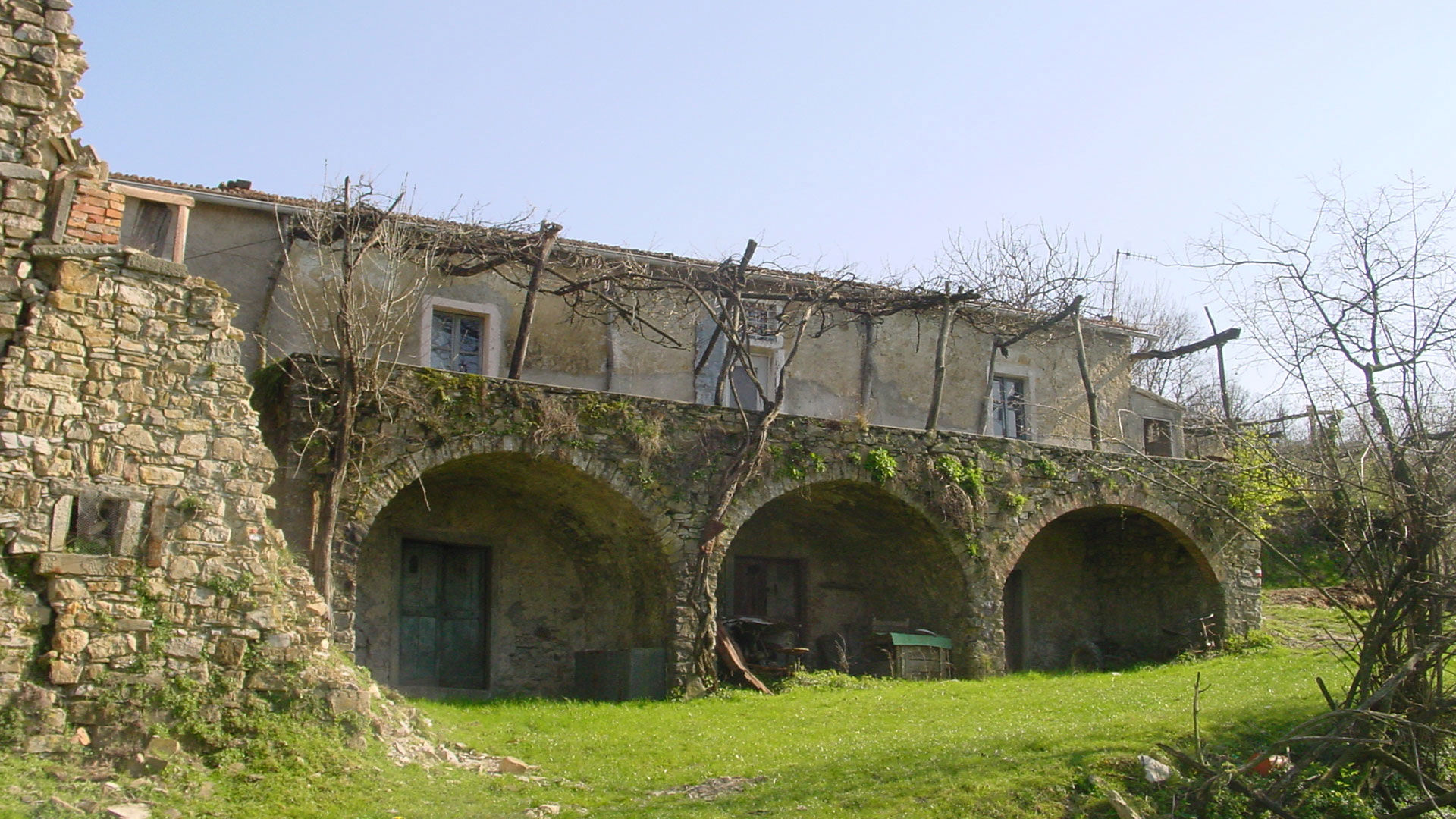
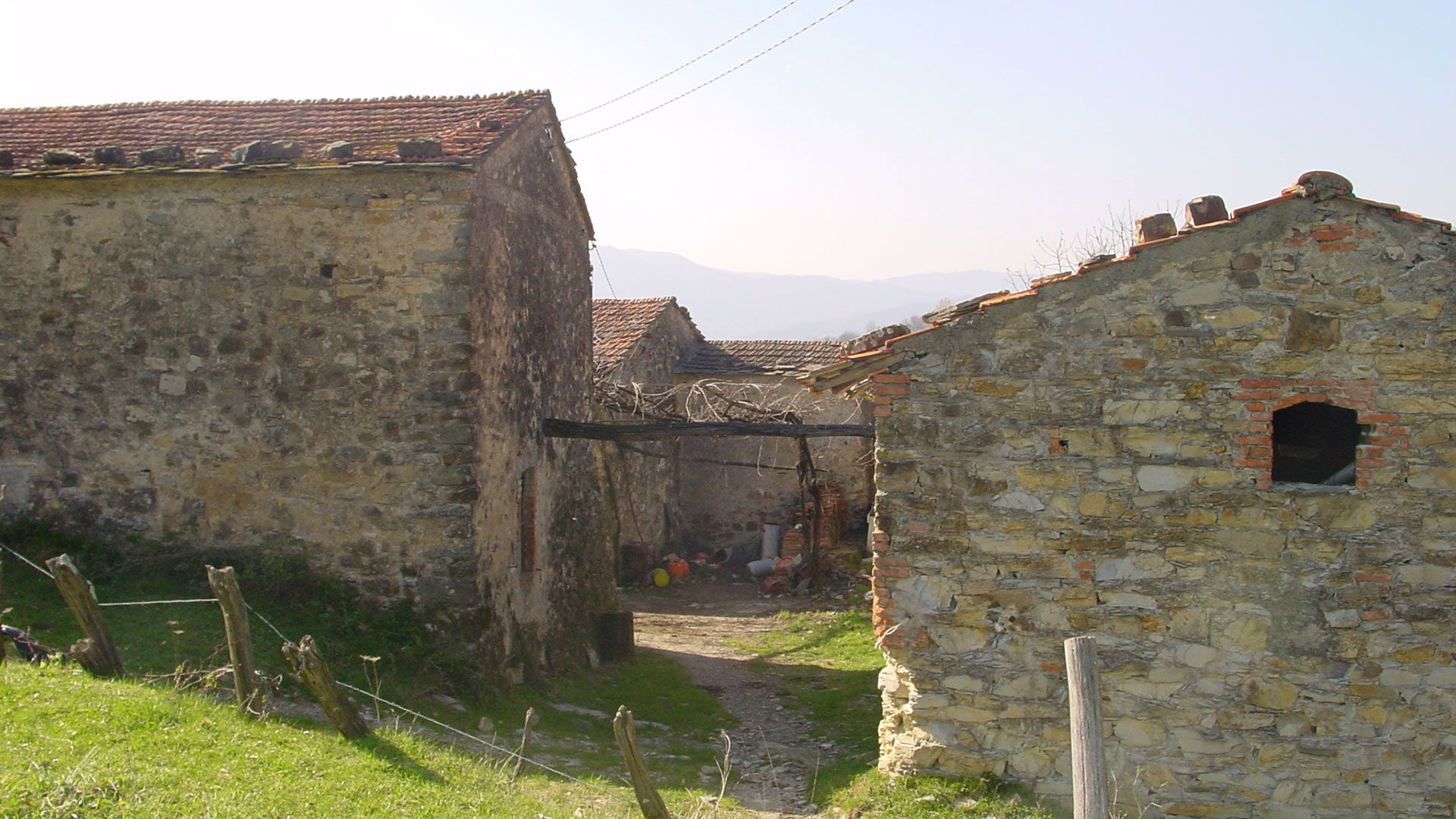
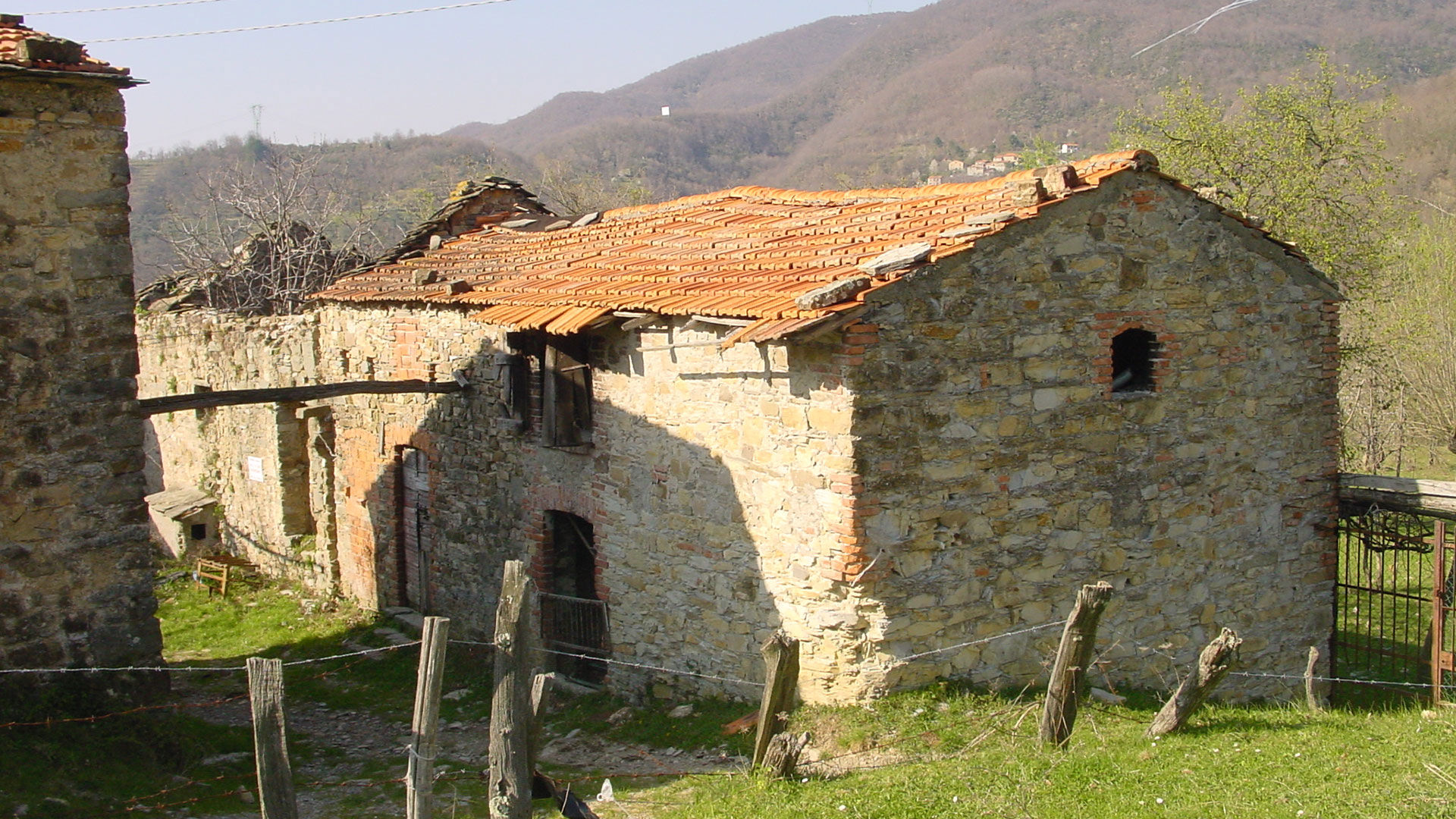
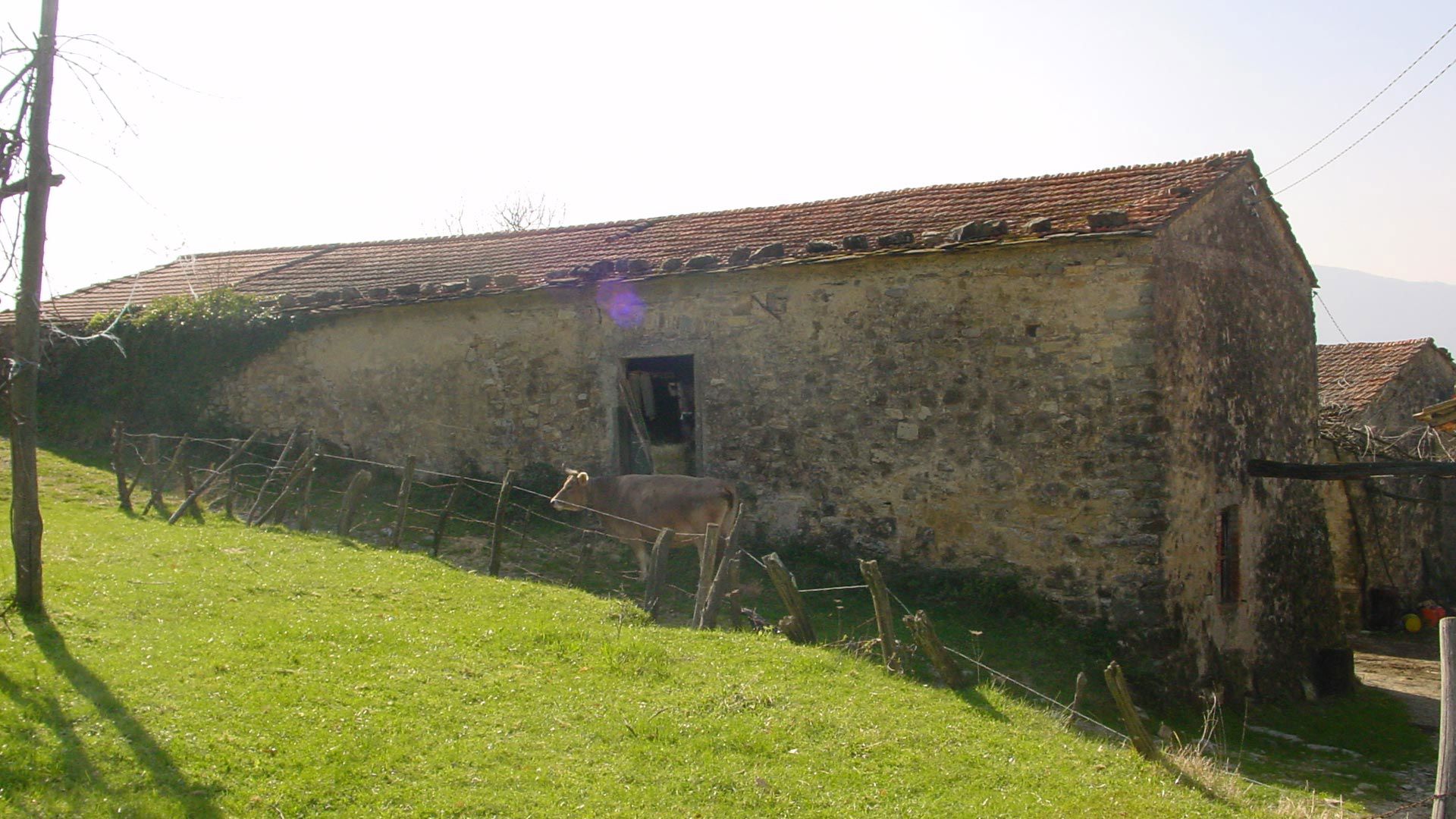
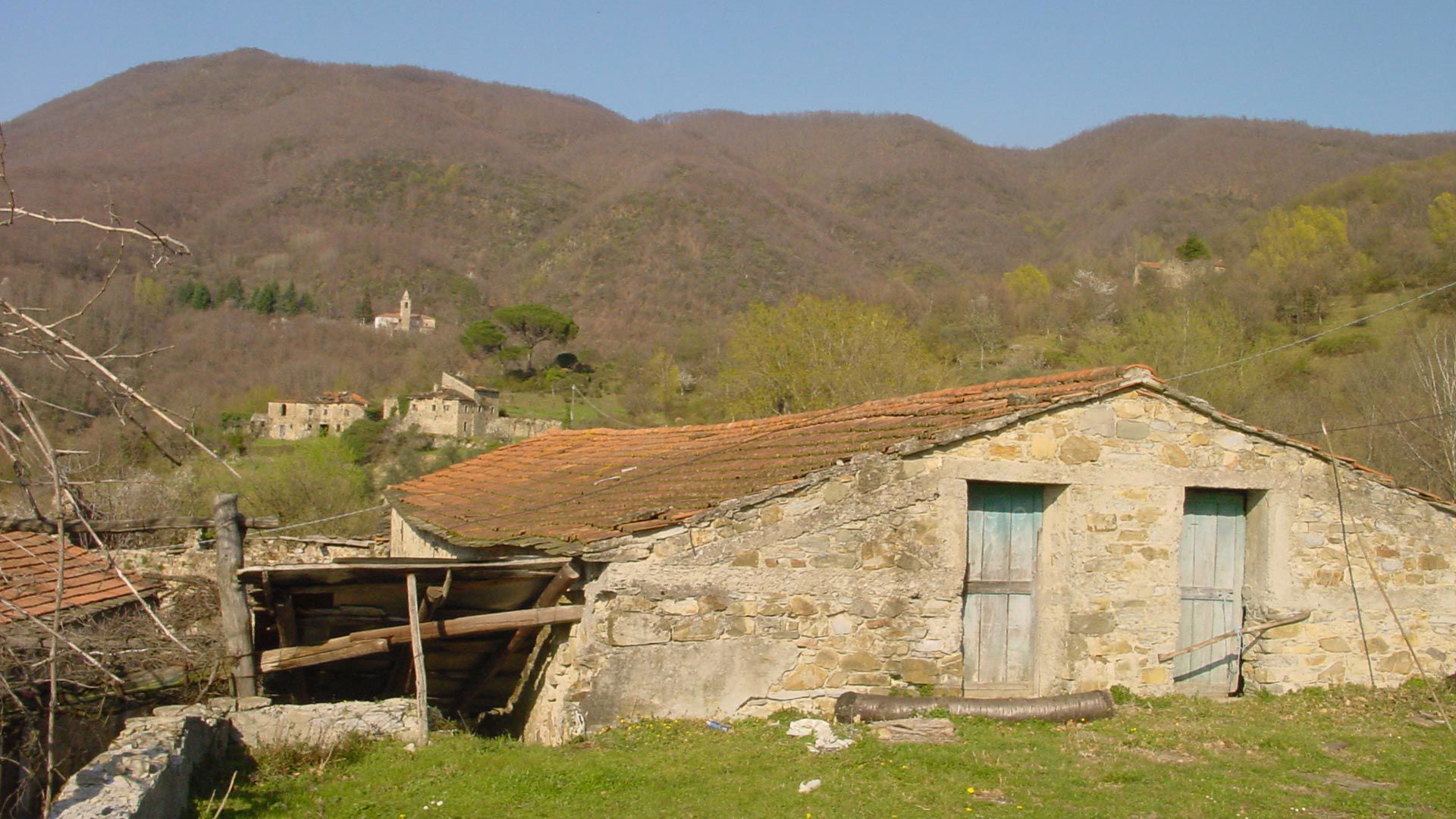
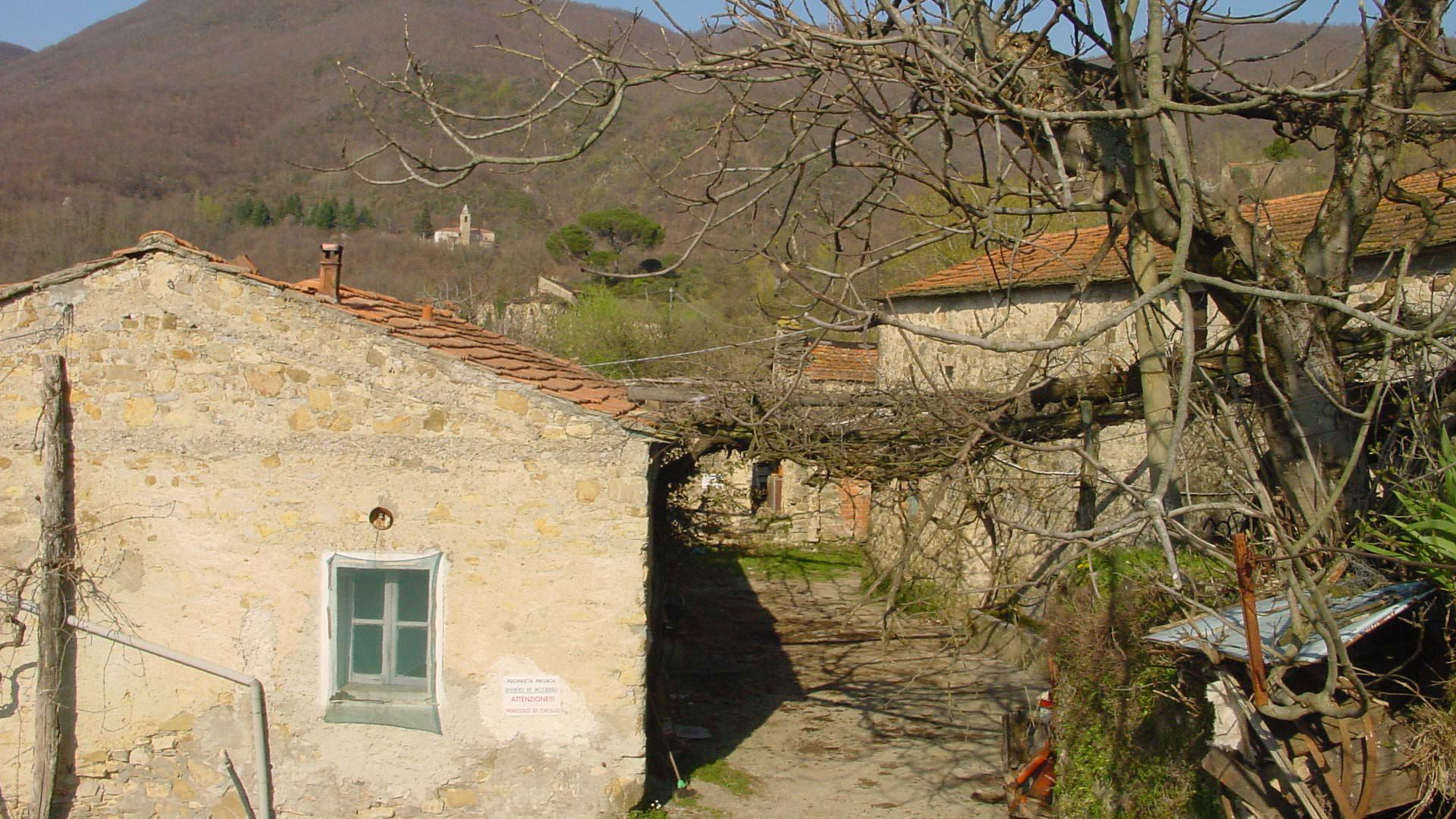
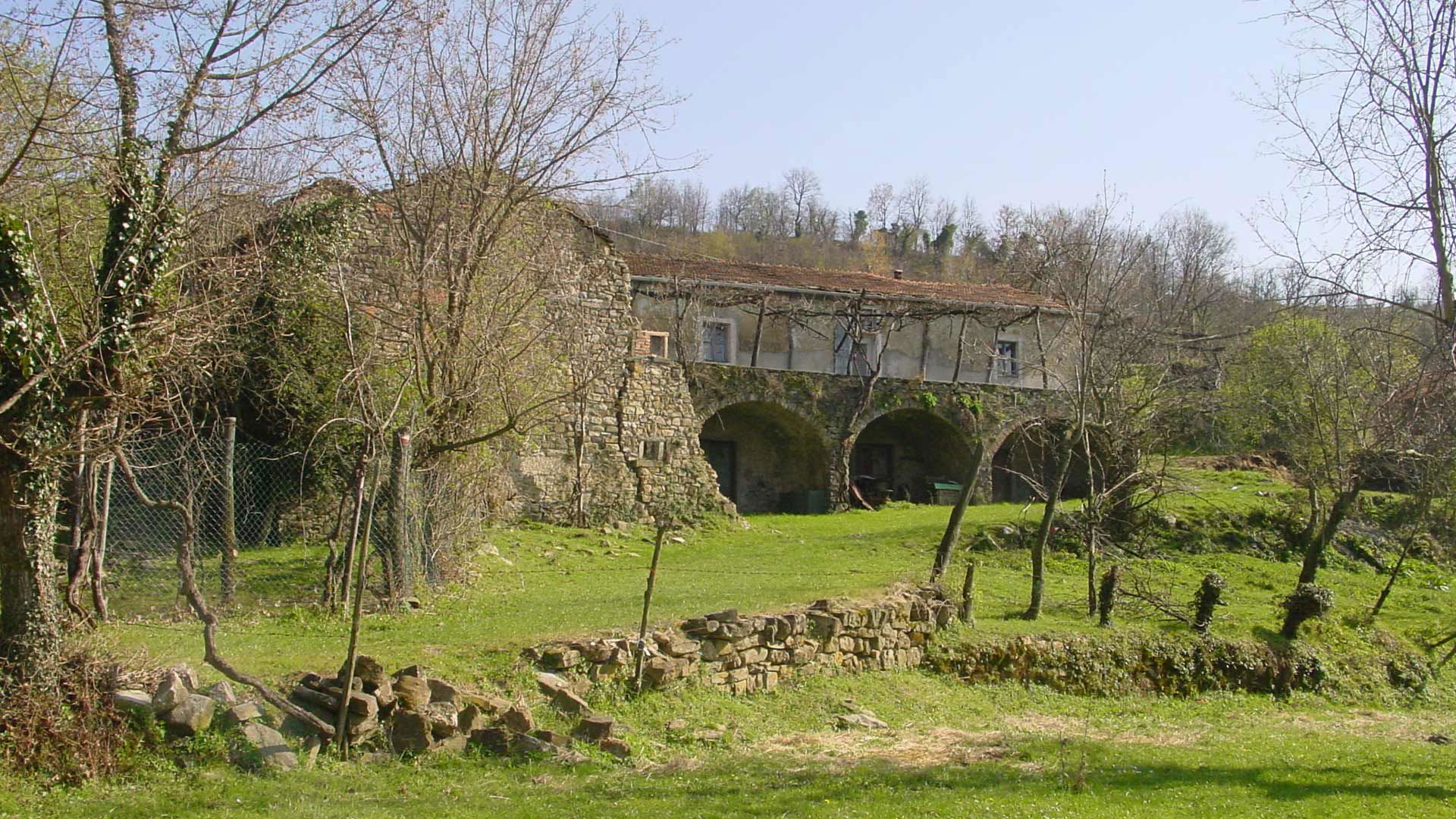
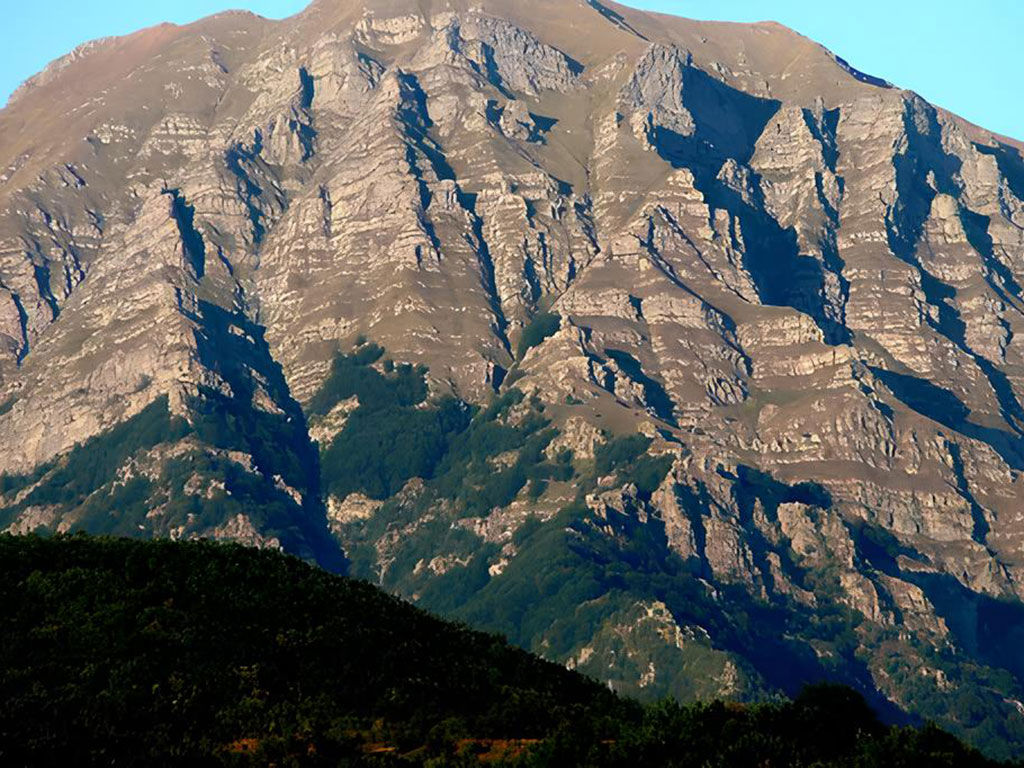
Podere Conti stands within a rural landscape shaped by centuries of agricultural use and long periods of natural regeneration. Located on the foothills of the Apennines, at the edge of what is now the Emilian–Tuscan National Park, the estate occupies land that has always existed in close relationship with woodland, pasture and seasonal cultivation.
For more than twenty years prior to the creation of Podere Conti, the property lay abandoned, gradually reclaimed by forest and vegetation. Buildings deteriorated, terraces collapsed, and cultivated land returned to wilderness. This period of neglect, however, also preserved the integrity of the landscape and allowed natural systems to re-establish themselves.
The decision to restore the estate was not driven by tourism alone, but by the recognition of a rare opportunity: to recover a historic rural site and reintroduce human presence in a way that respected the scale, rhythm and limits of the place.
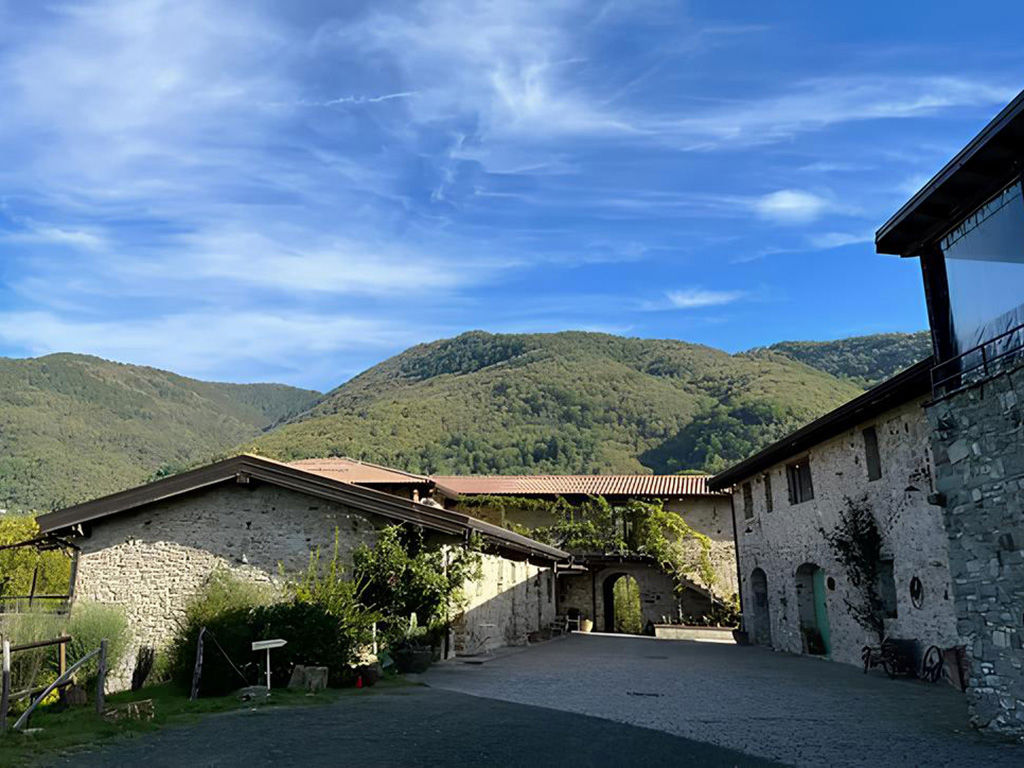
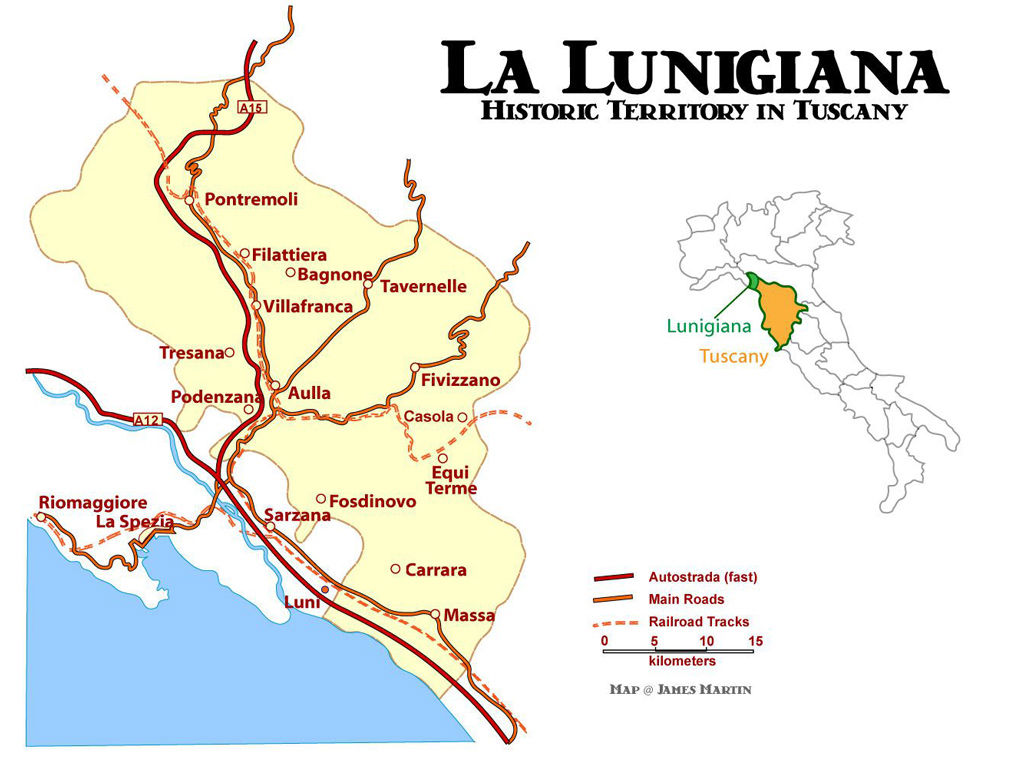
Restoration began with the land itself. Over time, woodland, pasture, olive groves and cultivated areas were carefully reactivated, working with existing ecosystems rather than against them. Buildings were recovered gradually, using traditional materials and techniques, and reintegrated into the landscape rather than reshaped to dominate it.
As the estate came back to life, agriculture, hospitality and family life developed together, forming a single, integrated project. Podere Conti was conceived not as a resort or a seasonal venture, but as a year-round, working rural estate — a place to live, to cultivate, and to receive guests with continuity and care.
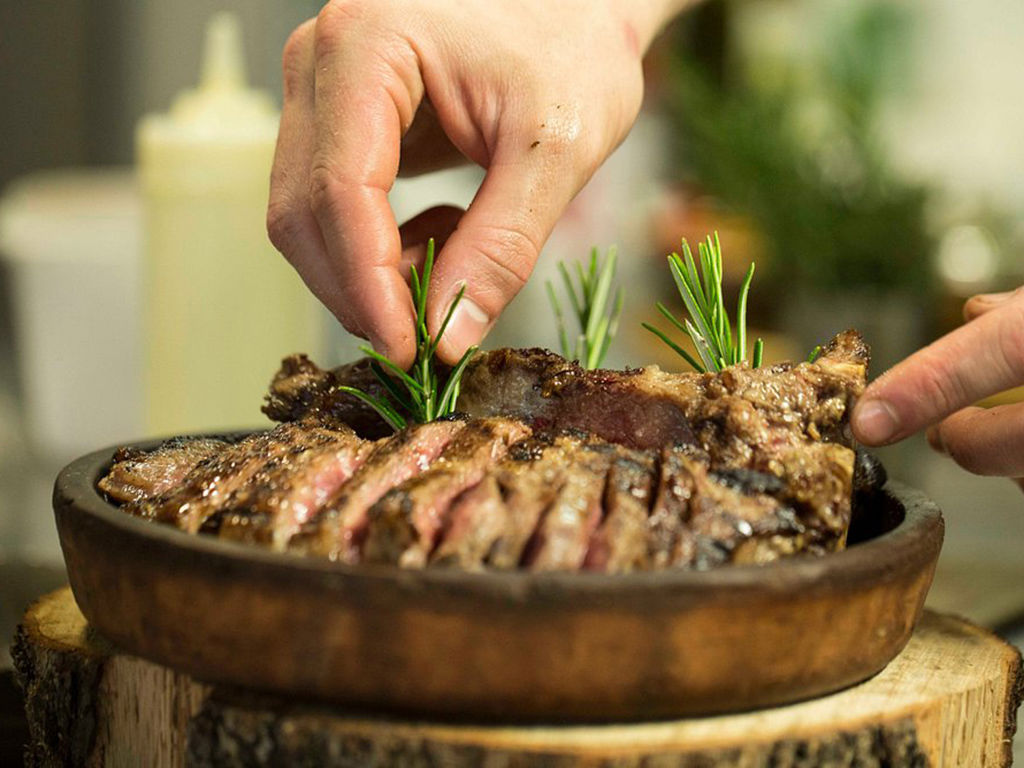
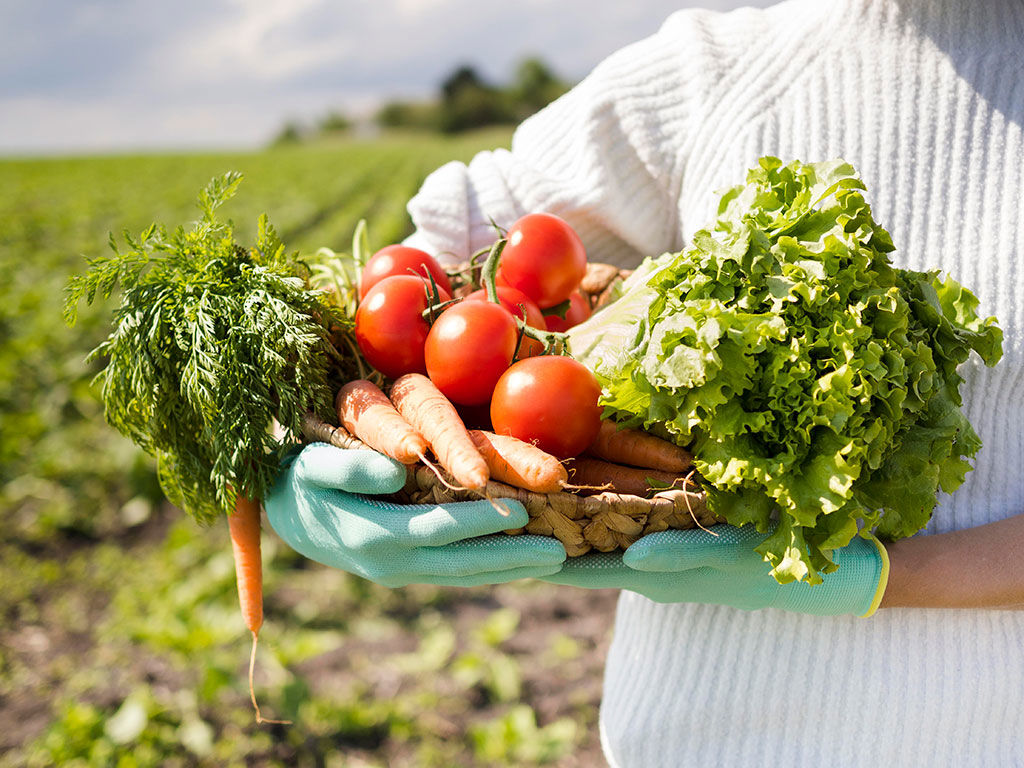
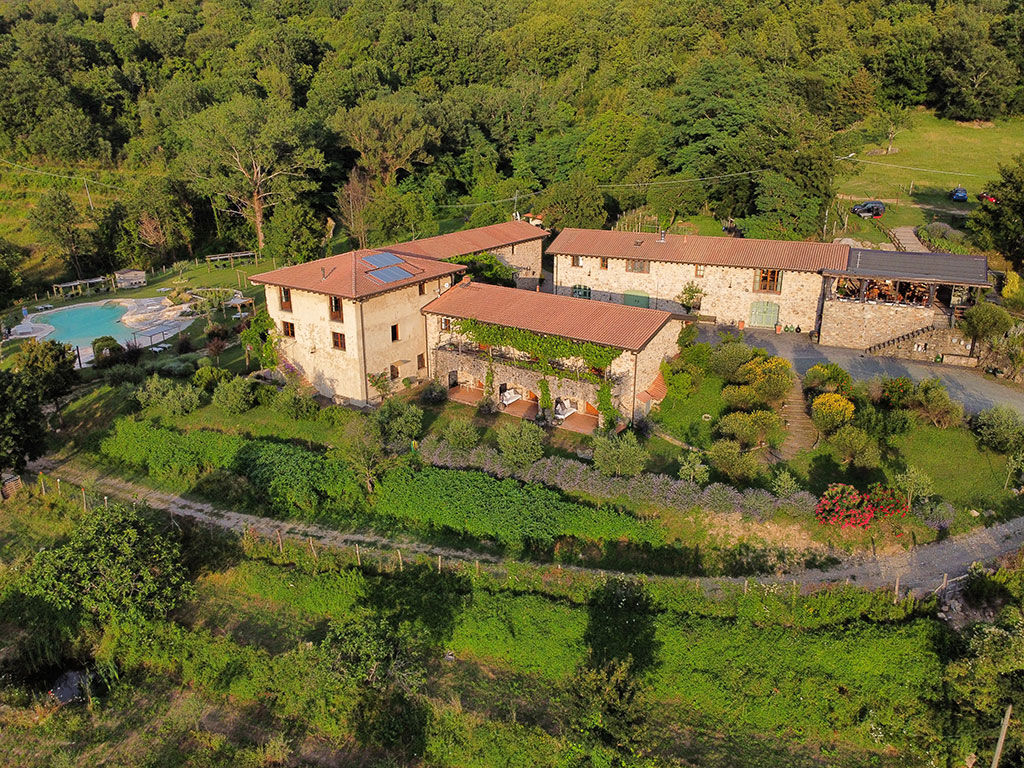
Today, Podere Conti remains a privately owned, family-run estate. Its hotel, restaurant and organic farm are all expressions of the same long-term approach: stewardship rather than exploitation, measured growth rather than expansion, and a commitment to maintaining the balance between land, people and time.
The agricultural activity of the estate — from olive groves to livestock, gardens and woodland management — is explored in more detail in the Organic Farm section.